ICAR-CIFRI Nurtures Future Administrative Leaders through Phase-II Training Programme for Viksit Bharat @2047
24 th July, 2026 Barrackpore
Reaffirming the Indian Council of Agricultural Research's (ICAR) commitment to building a future-ready, efficient and accountable administrative workforce, the ICAR–Central Inland Fisheries Research Institute (ICAR-CIFRI), Barrackpore, successfully organized the Phase-II Training Programme for Newly Joined Assistants (Reserve Panel), serving as the designated Nodal Centre for the programme. The initiative was aimed at strengthening administrative excellence, enhancing institutional governance, and preparing a new generation of professionals to effectively support India's agricultural research and innovation ecosystem.
The programme was conducted under the overall guidance of Dr. Pradip Dey, Programme Director, with Sh. Nirmal Sarkar, Chief Administrative Officer, ICAR-CIFRI, and Sh. Ravi Mishra, Senior Administrative Officer, ICAR-NINFET, Kolkata, coordinating the training.
The programme brought together newly recruited Assistants from ICAR-CIFRI (Barrackpore), ICAR-CRIJAF (Barrackpore), ICAR-IIAB (Ranchi), ICAR-NRC on Litchi (Muzaffarpur), ICAR-IARI (Hazaribag), ICAR-NISA (Ranchi), and ICAR-CRRI (Cuttack), creating a dynamic platform for learning, professional networking, and exchange of best administrative practices across ICAR institutions.
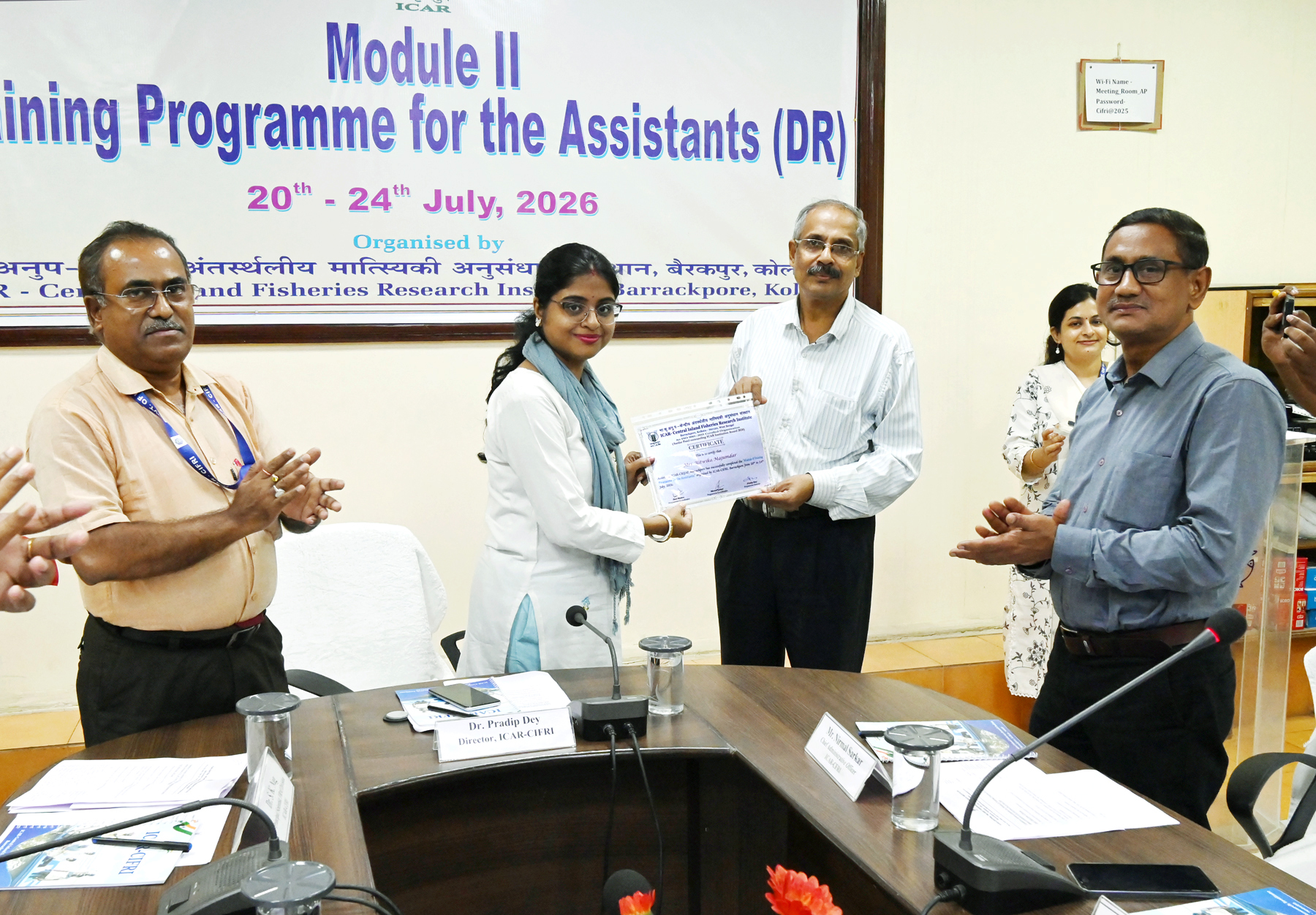
Addressing the participants during the valedictory session, Dr. Dey emphasized that an efficient administrative system forms the foundation of every successful research institution. He observed that while scientific innovations drive agricultural progress, robust administrative support ensures transparency, accountability, timely decision-making, and the effective implementation of institutional programmes. He further noted that the officials undergoing the training today will constitute the administrative leadership that will drive the vision of Viksit Bharat @2047, making their role pivotal in building a modern, efficient, and future-ready agricultural research system.
Highlighting the importance of continuous professional development, Dr. Dey remarked:
"A professionally competent and ethically driven administrative workforce is indispensable for achieving excellence in agricultural research. As the ICAR system evolves to address emerging scientific, technological, and governance challenges, our administrative personnel must be equipped not only with comprehensive knowledge of rules and procedures but also with integrity, innovation, accountability, and a strong service orientation. These officials will be the administrative leaders who will steer our institutions towards the vision of Viksit Bharat @2047. This training is therefore an investment in human capital that will strengthen institutional efficiency, promote transparent governance, and contribute significantly to building a modern, responsive, globally competitive, and future-oriented agricultural research system."
The intensive training programme featured an extensive curriculum covering the entire spectrum of government administration, financial management and institutional governance. Participants received expert inputs on the Manual of Office Procedure, official noting and drafting, preparation of Cabinet Notes, service matters relating to Technical, Administrative and Scientific Cadres, Technical Service Rules (TSR), Assessment Promotion, Career Advancement Scheme (CAS), Agricultural Research Service (ARS), study leave, deputation, foreign service, CCS Leave Rules, Leave Travel Concession (LTC), Travelling Allowance (TA) Rules, disciplinary proceedings, CCS (CCA) Rules, CCS (Conduct) Rules, Right to Information (RTI), grievance redressal, handling of court cases, General Financial Rules (GFR), Delegation of Financial Powers in ICAR, CGHS and CS(MA) Rules, pension and retirement benefits, General Provident Fund (GPF), National Pension System (NPS), pay and allowances, Public Financial Management System (PFMS), budgeting, annual accounts, pay fixation, taxation, audit procedures, Government e-Marketplace (GeM), and digital governance platforms including e-Office, SPARROW and eHRMS.
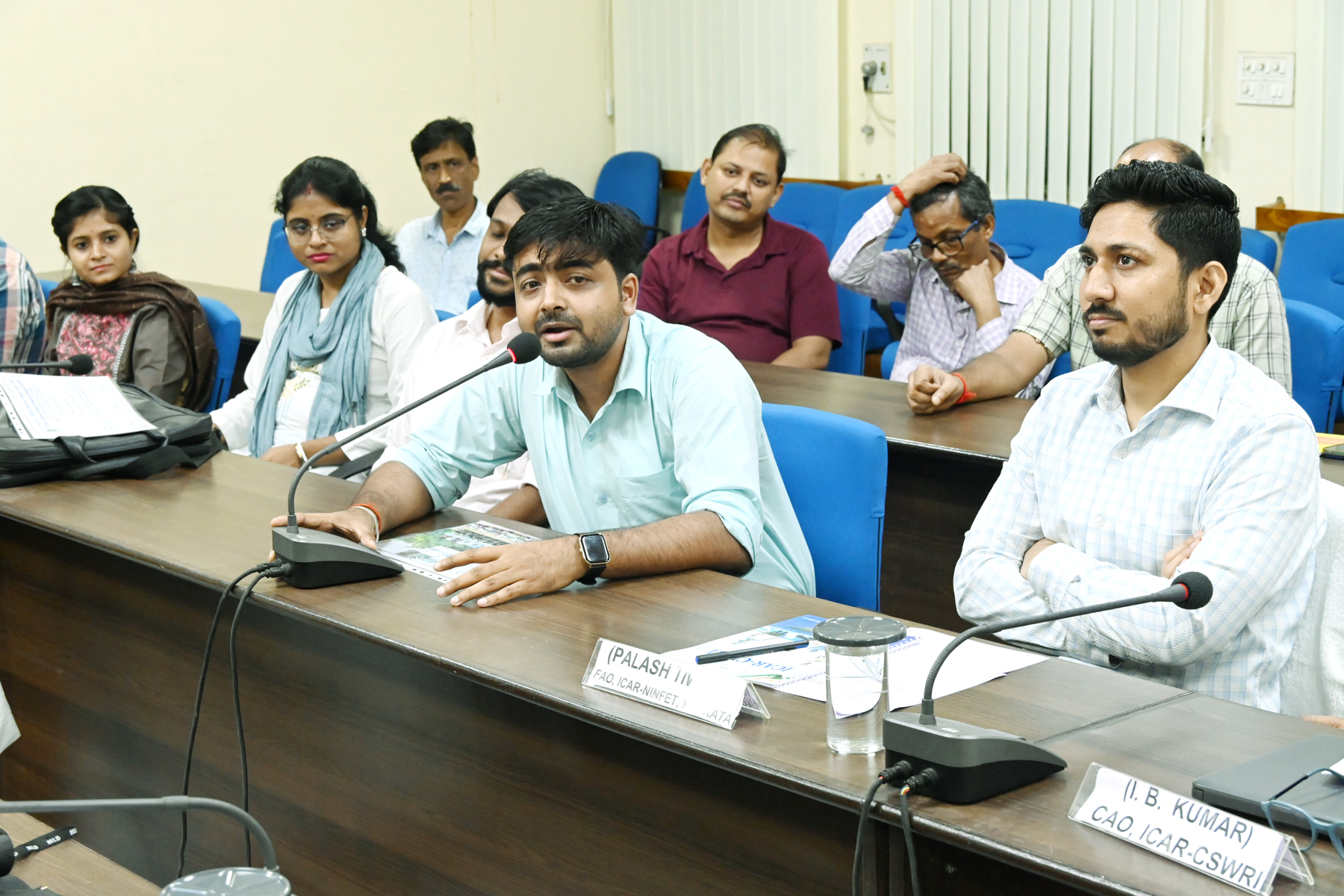
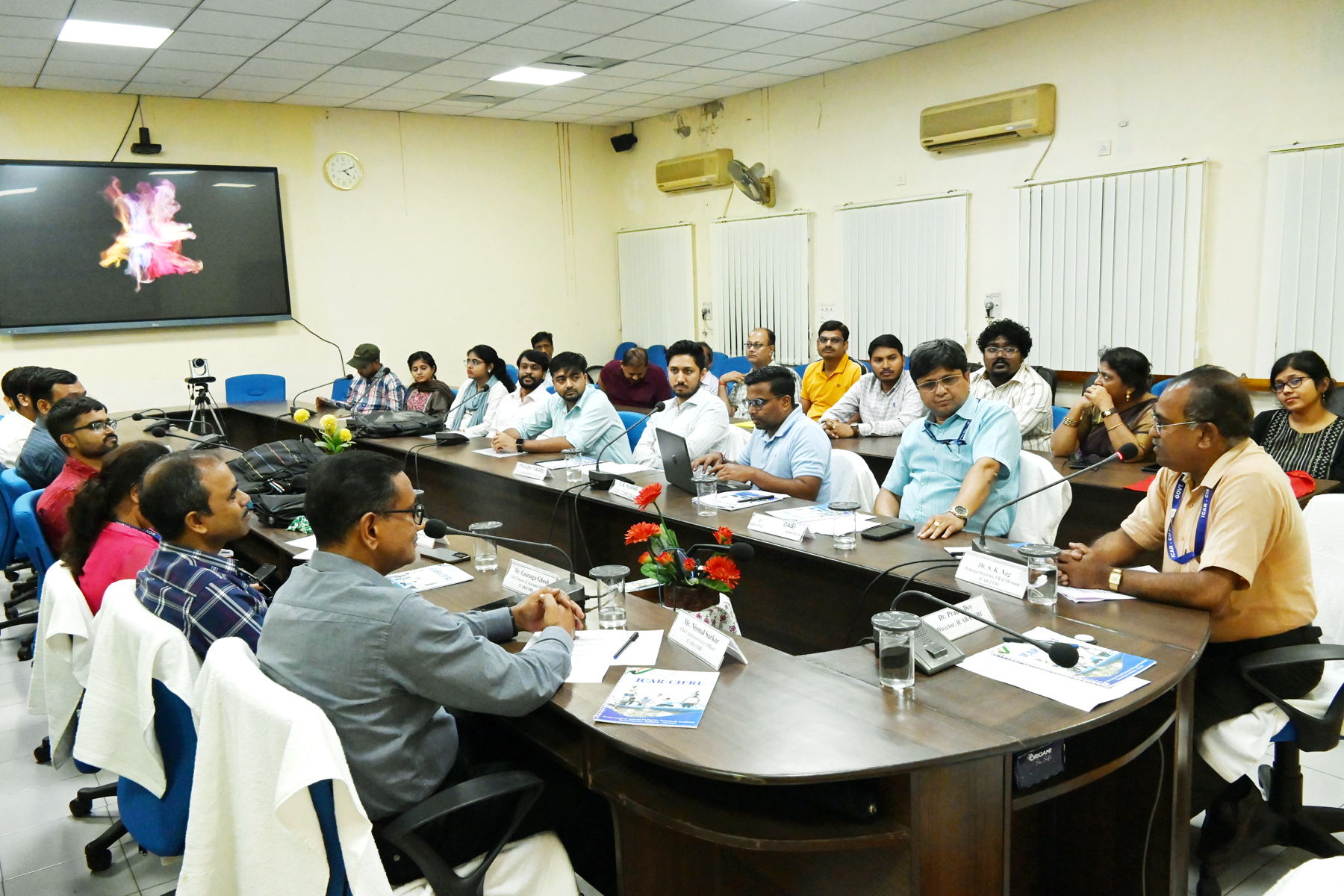
Beyond classroom instruction, the programme fostered a vibrant environment for collaborative learning through interactive discussions, practical demonstrations, case-based deliberations and experience-sharing sessions. These engagements enabled participants to gain practical insights into administrative processes while strengthening inter-institutional coordination and professional networks across the ICAR system.
Participants actively engaged throughout the technical sessions and practical exercises, demonstrating keen interest in enhancing their professional capabilities. During the valedictory session, they expressed appreciation for the comprehensive curriculum, the expertise of the resource persons and the excellent arrangements made by ICAR-CIFRI. They acknowledged that the programme substantially enriched their understanding of government procedures, financial administration, service regulations and digital governance systems, while enhancing their confidence to discharge official responsibilities with greater efficiency and professionalism.
The successful completion of the programme marks another significant milestone in ICAR's ongoing efforts to build institutional capacity and administrative excellence. The enthusiastic participation and positive feedback received from both resource persons and trainees reaffirm the Council's commitment to nurturing a highly skilled, ethical and responsive administrative cadre capable of supporting world-class agricultural research, innovation and effective institutional governance in the years ahead.