CIFRI Awards
Sonarpur, South 24 Parganas
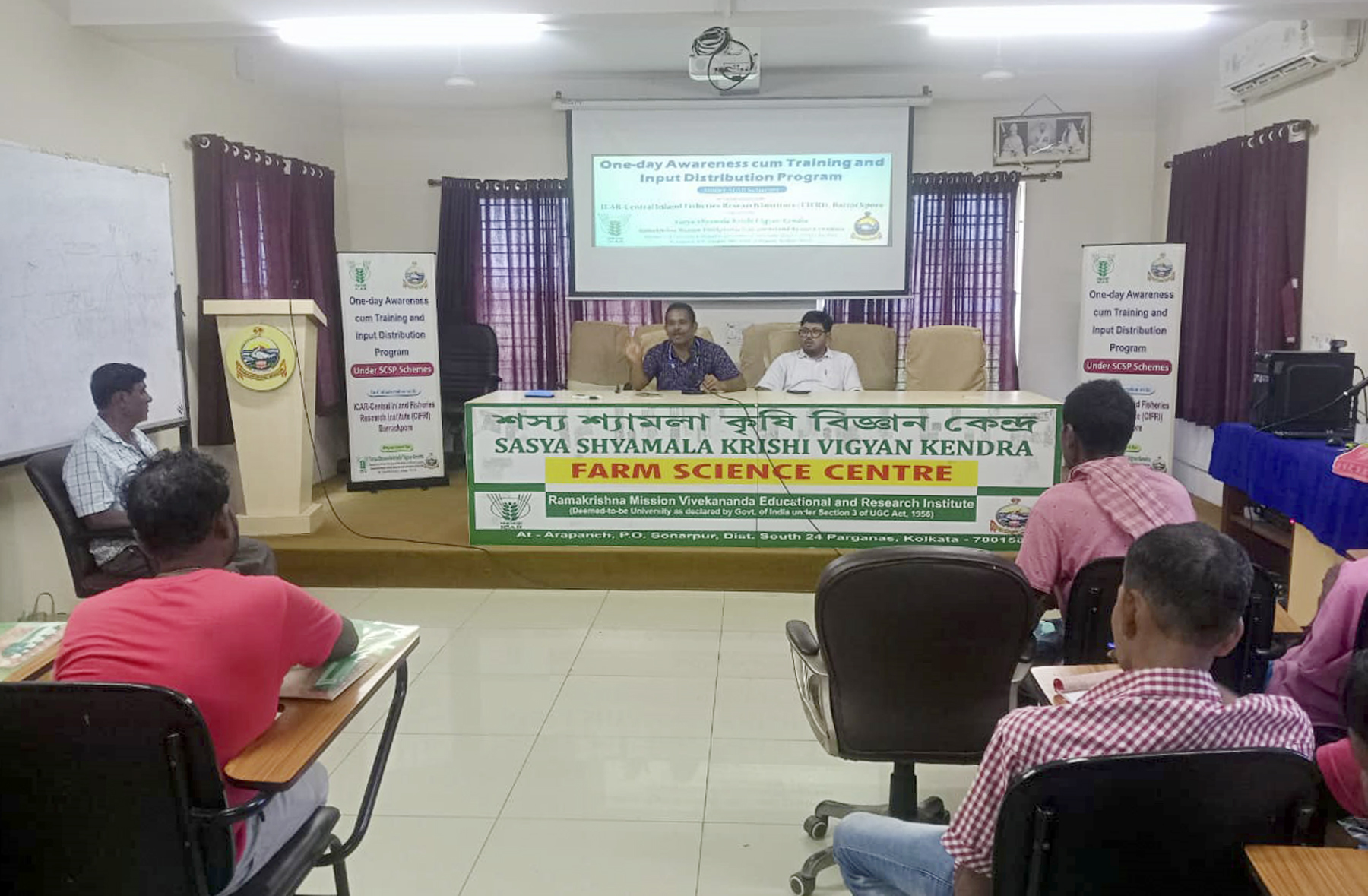
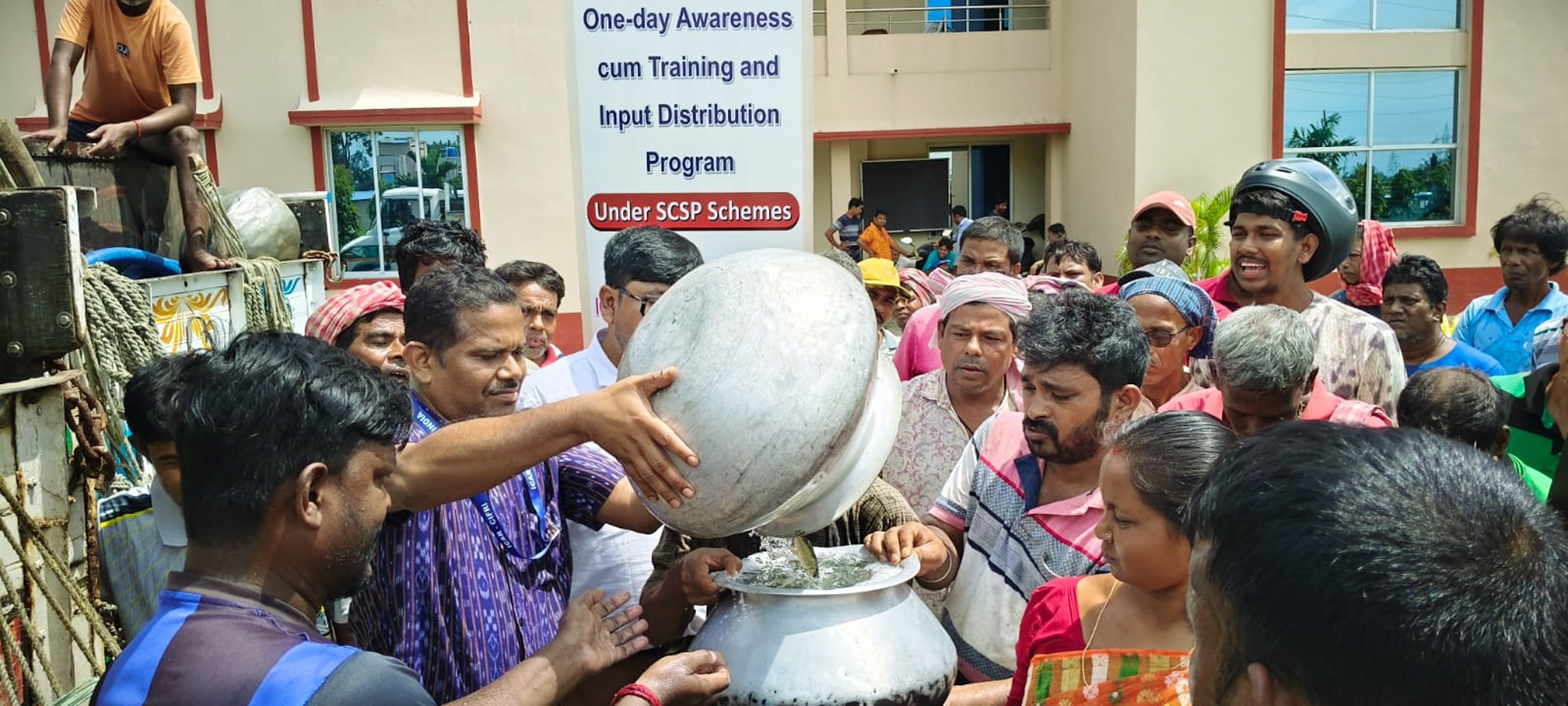
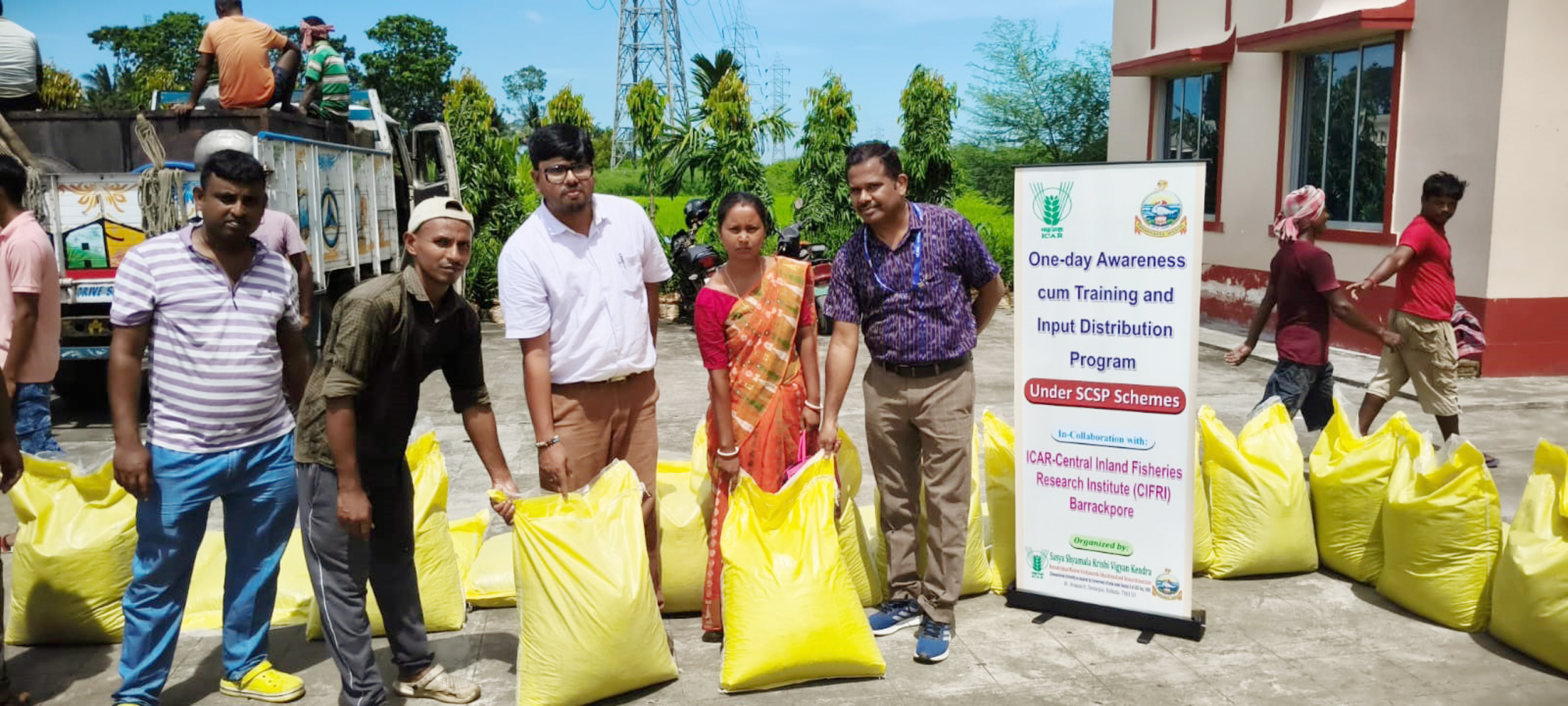
In a significant initiative to promote inclusive, sustainable and science-based fisheries development, the ICAR–Central Inland Fisheries Research Institute (ICAR-CIFRI), Barrackpore, in collaboration with Sasya Shyamala Krishi Vigyan Kendra (RKMVERI), organized a one-day awareness-cum-input distribution programme for Scheduled Caste (SC) fish farmers at Sonarpur, South 24 Parganas, West Bengal. The programme was conducted under the guidance of Dr. Pradip Dey, Director, ICAR-CIFRI, who emphasized the importance of strengthening local fisheries-based livelihoods through technology-driven and sustainable aquaculture practices. Dr. PranayaParida, SCSP Nodal Officer, ICAR-CIFRI, emphasized that scientific pond management—including quality seed, optimum stocking, balanced feeding, water-quality and fish-health management—can significantly enhance fish productivity and farm income.He also stressed efficient utilization of water resources and timely harvesting to improve productivity and minimize avoidable production losses. Dr. Swagat Ghosh, Head, Sasya Shyamala KVK, highlighted the pivotal role of KVKs in disseminating improved agricultural and fisheries technologies and urged beneficiaries to judiciously utilize the supplied fish seed and feed while maintaining proper production records. He emphasized continuous technical guidance and adoption of scientific practices for enhancing fish productivity and economic returns. In his message, Dr. Dey, emphasized the transformative potential of Scientific Aquaculture in building resilient, productive and self-reliant rural fisheries systems. He highlighted the importance of promoting location-specific, science-based aquaculture technologies to enhance fish productivity, ensure timely access to quality fish seed and inputs, and address transportation and logistical challenges, particularly in remote and underserved areas. He underscored the need for decentralized aquaculture development, technological innovation, digital solutions and efficient resource management to strengthen local fisheries value chains and diversify rural livelihoods. He further envisioned an inclusive, climate-resilient and environmentally sustainable aquaculture sector that integrates scientific knowledge with local resources and community participation, contributing to rural prosperity, livelihood security and a self-reliant fisheries economy. An important feature of the programme was the direct interaction between farmers and fisheries experts. Farmers raised field-level issues concerning fish growth, feeding practices, pond management and fish health, which were addressed by the technical team through practical and location-specific recommendations. The combined provision of quality IMC fingerlings, fish feed and scientific technical guidance is expected to provide a strong foundation for improving fish production and farm-level returns among the participating SC farmers. Beyond input support, the initiative seeks to build farmers' technical capacity and encourage a shift from conventional fish culture towards productive, sustainable and knowledge-based aquaculture. Organized under the Scheduled Caste Sub Plan (SCSP) of ICAR-CIFRI, the programme aimed to strengthen the capacity of small and marginal fish farmers by providing them with scientific knowledge, quality aquaculture inputs and technical guidance. A total of 100 SC fish farmers participated in the programme. Each beneficiary received 34 kg of quality fish feed and 7 kg of advanced Indian Major Carp (IMC) fingerlings to support scientific fish culture in their ponds. The programme reflects the continued commitment of ICAR-CIFRI and Sasya Shyamala KVK towards inclusive fisheries development and technology-led livelihood enhancement, particularly among socially and economically vulnerable farming communities. The programme concluded with a commitment to provide continued technical support and follow-up guidance to the beneficiary farmers, with the broader objective of transforming fish farming into a more productive, sustainable and economically viable livelihood enterprise.