CIFRI Awards
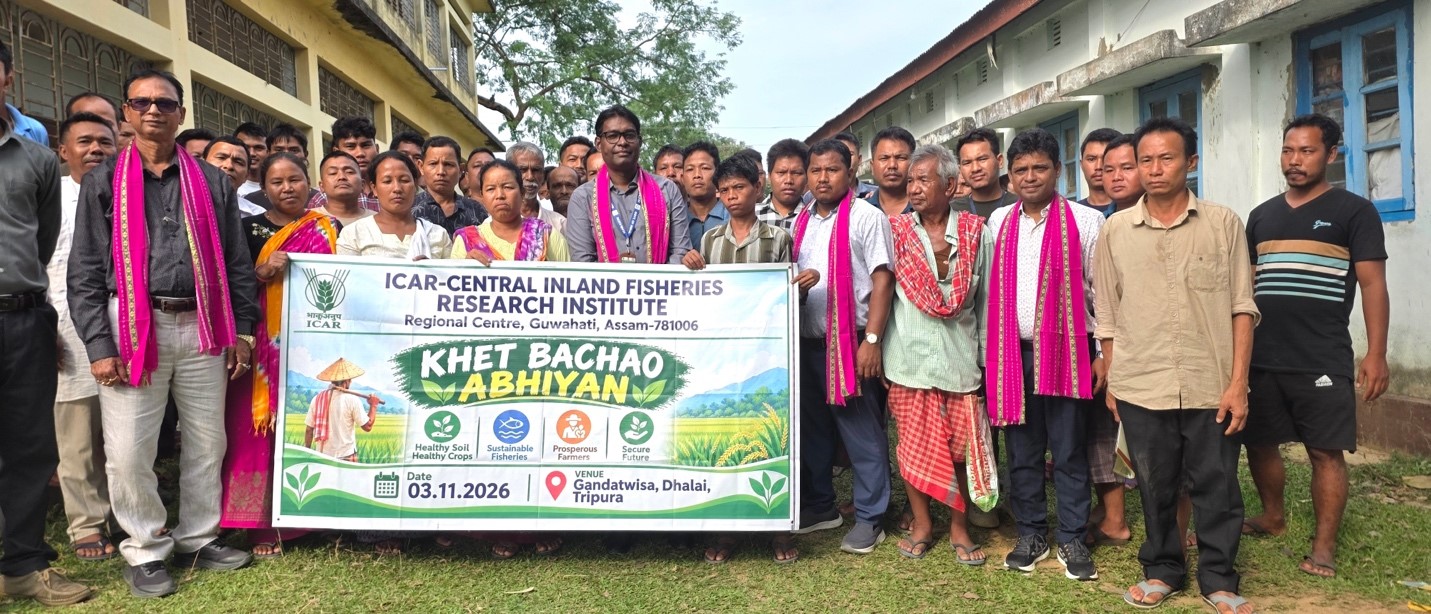
Gandatwisa, Tripura
Reinforcing the importance of scientific farming, healthy soils and sustainable fisheries for resilient rural livelihoods, the ICAR-Central Inland Fisheries Research Institute (ICAR-CIFRI), Regional Centre, Guwahati, Assam, organised a Khet Bachao Abhiyan programme at Gandatwisa in Dhalai district of Tripura on 3 November 2026, in collaboration with the Department of Fisheries, Government of Tripura. The programme was conducted under the leadership of Dr. Pradip Dey, Director, ICAR-CIFRI, Barrackpore, and coordinated by Dr. Sullip Kumar Majhi, Principal Scientist and Head, ICAR-CIFRI Regional Centre, Guwahati. A total of 48 farmers, comprising 33 male and 15 female participants, actively participated in the programme. The initiative focused on sensitising farmers to the critical relationship between soil health, crop productivity, aquatic ecosystem conservation and sustainable livelihood development. It emphasised the need to adopt scientifically informed and climate-resilient agricultural and fisheries practices, ensuring efficient utilisation of natural resources while maintaining long-term productivity and environmental sustainability. Addressing the farmers, Dr. Majhi highlighted the importance of soil-test-based fertiliser application, balanced nutrient management and integrated nutrient management for maintaining soil fertility and improving crop productivity. He stressed the judicious use of chemical fertilisers in conjunction with organic manures and bio-fertilisers, discouraging indiscriminate application of fertilisers and promoting environmentally responsible agricultural practices. He also underlined the importance of climate-resilient farming approaches in addressing emerging challenges associated with climate variability and natural resource degradation. Dr. Shyamal C. S. Das, Senior Scientist, ICAR-CIFRI Regional Centre, Guwahati, elaborated on the scientific management of pond-based aquaculture, particularly the recommended fertiliser doses and their appropriate application for maintaining pond productivity and water quality. He also sensitised the participants to improved agricultural and fisheries technologies that can enhance farm productivity, optimise resource utilisation and strengthen the economic viability of integrated farming systems.